9/15/2010

Past Due

Preface: I had compiled this entry back sometime around 7·11, but the formatting in the newer editor of the blogger software made the links all funky, and some of the style carried over from pasting, which I really didn't like, but fixing it seemed like a huge pain (I had gone straight back to the pure html, which was way more complicated than I had started with), so I just didn't post anything for the last few months. But now I've reinspected it and it isn't nearly as terrible as it once seemed. And so here is this post, with the next two months of nonsense to follow shortly afterwards.


5·20·10
Hopefully I can book CERN!
Do you think adding this in the comments field helped or hurt my odds? They recommended we book 3-4 months (instead of a few weeks) in advance:
I wish we had thought of this 3-4 months ago. We both have undergraduate degrees in physics, does that help our case? I've also personally explained the safety margin [of the LHC and black holes] to many concerned friends and acquaintances following the media hype last year :-) Thanks for the chance!

Update 7·11·10: CERN was great! Pictures (eventually) on facebook.

5·26·10
"A very special kind of monster."

5·27·10
Always one foot on my mind.
Is this another dead end?
Break my fall.
Sorry, I'm busy rewiring my brain.

So you try to figure out what you want, and you try to figure out how much you want what it is you want. And maybe you even just get hung up on trying to figure out why it is you want what you want. But somehow this is all too much. And it doesn't work. And I haven't figured it out yet.

Hmm... this is interesting:
"What this means is that in a broad sense a theistic worldview is empirically unfalsifiable…just like a naturalistic one."
From some loon PZ is talking about here.
I find it interesting, because on some level he is right: naturalism and theism are both unfalsifiable. But for different reasons.
Theism is unfalsifiable because its claims are limited to that which cannot be measured, by definition. It's not just unfalsifiable, it's ultimately unknowable in any interpretation (else we could all agree on one true consistent theism, which is laughable).
Naturalism on the other hand is unfalsifiable for a reason more akin to why conservation of energy has always been true: because our concept of naturalism is the claim that: that which exists and influences the world is in fact knowable. This cannot be falsified because probabilistic laws allow seemingly uncaused behavior to occur (like the vacuum fluctuations). So it's difficult to see how a deity can even fit into reality, or any sort of spiritualistic/non-naturalistic entity or event or influence… if it has a causal influence, it could be described by either probabilistic or deterministic mathematics. If it can be observed, it can be modeled. And if it can't be observed, then in what sense does it exist at all?
In other words, spiritualism, or mentalism, requires a unknowable element, whereas naturalism forbids unknowable elements (or at least unmeasurable elements).
These are the essential components to the definitions of these words, and they are also the most basic reasons why mentalism is completely useless.
The utility of a belief that requires at least one part to be unknowable is really zero. There are useful things in which much is unknown, for instance, black box arguments in computer science, but in those instances we don't require an element to be unknown, it just so happens that knowing every element is not required for the argument to be useful.
That is, there is a difference between arguments in which steps are unknown, and arguments in which steps cannot be known.


5·30·10
Afterbirthday party?

Can you disrespect an idea, belief or tradition, without disrespecting people who hold/support/cherish such an idea/belief/tradition?
If the answer is 'yes', then why is disrespecting a religion often interpreted as disrespecting people?
Otherwise, why does respecting a person mean restraining oneself from speaking earnestly and openly?
Aren't there situations when politeness deserves a back seat to well being?

As I've aged I seem to have become increasingly intolerant of ideas I'm not interested in. It's a bit embarrassing really. This is quite obvious in certain instances, such as the rubik's cube notation. I never learned to read it, because it didn't interest me enough. I didn't even really bother to try.

I do think it was mostly my brain seeing a pattern where there wasn't one.
New game: eat juicy fruits with no napkin (nor napkin equivalents).

I don't respect any of the other religions either, and I wouldn't hesitate to mock any of them. I am an antitheist and I consider major organized religions to be more responsible for human suffering (both now and throughout history)

I consider christianity to be the number one threat to global human wellbeing, and islam to be a close second (they just tend to wield less power).

If moderate muslims want my respect then they should come out and support satire of their religion. However, I don't see why I should respect anyone who holds a religious belief above the life of another human being. Furthermore, if we don't push this issue then we essentially condone their behavior, and we reinforce the idea that religious belief is somehow equal or greater than human rights.
And if homosexuality carried any of the tenets of most of the major religions I wouldn't hesitate to criticism and mock them either. If the average muslim is a tolerant peaceful person, then I would like to invite them in combatting the extremists. Unfortunately I think moderate muslims are probably more enabling extremists, much like the large group of christian moderates allows for a larger group of extremist christians to persist. It isn't that moderate christians or muslims are intolerant of other people, it's that they inhibit the criticism of the extremists, making it look as if criticism is some kind of discrimination, or bigotry. But it isn't: religious extremists are one of the greatest causes of human suffering, especially given that many of the other great causes are not so nearly under human control (e.g. disease, and natural death).

I haven't drawn mohammed yet, but as an antitheist—and more so as a proponent of free speech—I vehemently oppose the notion that any religious belief should trump freedom of speech. I would strongly agree that we not persecute anyone for their religion, but persecuting the religions themselves I am all for. Update 7·11·10: I did draw Muhammed for "Draw Muhammed Day" 

If christians or jews were murdering cartoonists for depicting jesus or moses (or yaweh or god or anyone really) I would reply in the exact same manner without hesitation.

I think that if muslims want to be respected they need to behave like civil members of society. (Note: I already respect the many muslims who would denounce the cartoon-induced murders.

(1 + 0.9 cos(8t)) (1 + 0.1 cos(24t)) (0.9 + 0.05 cos(200t)) (1 + sin(t)), with t from -π to π.


6·1·10
So why don't we put a 1000 ton granite block on the oil leak? (Assuming we could make such a block, I think we could probably manipulate it, though 5000 feet is a very long way.)

So I went looking for 1000 ton granite blocks on google, and found this: http://www.sacredsites.com/middle_east/lebanon/baalbek.htm which mentions 1000 ton, 65+ foot long stones used in ancient Roman architecture! I guess it is here: http://en.wikipedia.org/wiki/Baalbek in modern day Lebanon. Maybe a 1000 ton block wouldn't work either…

I suppose my thinking goes like this: when I say I am a seven, I am saying that the claims humans make about the existence of a god are patently false. Assuming they could possibly have some truth to them, it would be out of shear coincidence, and not due to any sort of casual connection relating the two. But that is ridiculous speak. If I make up my own deity right now, it has no greater chance of being right or wrong than one our society has collectively evolved for tens to hundreds or even thousands of years. Which is to say that none of them have any chance of being right. It is simply absurd to believe in the easter bunny, or santa claus or the tooth fairy, if you are an intelligent creature with a reasonably experienced and matured view of the world. 


6·6·10
These people are amazing. I mean, AMAZING!

"This is a seri... I'm a seri... I'm, uh... I've tried to be a serious man."

 maybe a 10,000 ton block? I remember reading that those battle ships with 16" guns weigh 55,000 tons, I wonder what an aircraft carrier weighs…

As directed by xkcd, I read Bruce Schneier on Security, and holy crap does he have a great point. And I'd like to say I avoid that often, but it certainly isn't true. And to prove it I must only admit (regrettably) that I went to read the article with the legitimate intent to find out what the worst case scenario for the oil leak actually is. (This morbid fascination with worst case scenarios is pretty persuasive, and embarrassing; this morning on NPR they mentioned a worst case being December, or even years, which seems awfully ridiculous. But then again I have no idea what a reasonable estimate would look like, though I find it hard to imagine that not enough information is known to make a reliable estimate.)

And now I've read an actual assessment as well. It's got some interesting things in it.

Later I mentioned the big rock idea to Brian Hayes, who pointed out that the fear would be that oil would continue leaking around the smushed pipe, and then we would have no chance of clamping onto the pipe to stop the flow with equipment. It makes a lot of sense, and it gave me a chill: for the first time I am thinking that it may be the case that humans simply cannot stop the leak. How terrifying.


7·7·10


Anonymity is weird; on the one hand, it is an indispensable feature of progress, allowing those who know to safely reveal what they know to the public. On the other hand, the greater the degree of privacy we maintain, the more in the dark we all feel about what is and isn't allowed, or appropriate, or common or reasonable, etc. 


A part of me wants to emigrate. Not because somewhere else would be so much better, but that we are simply so much worse. Our consumption and our wars overwhelm me. It is something I wish to stop participating in.


Purdy!


7·8·10
Okay, so under my own volition I am revising my question. If the rate of automation can be made to produce at a faster pace than the appetite for acquiring new technology, then we will inevitably have replaced ourselves, right? That is, we automate this and that task, through out our society, including the most mundane and simple tasks, as well as some of the most incomprehensibly complex and important tasks. For instance, processor design and construction are both heavily reliant on computers and robotics. There must be a threshold parameter, after which the degree of automation in society can replace all practical jobs. Starting with devices that can build themselves, thus reducing the cost to materials only. 

"There was that amazing light -- the rich blue skies, dotted with scudding, big-bellied clouds that shifted the sunlight, making fields and rocks broody, then brilliant, in a flash. Monet capitulated, came to Honfleur, and he and Boudin painted side by side, outside, using portable easels and paint in tubes."


"And suddenly, suddenly, Claude Monet just understood what his friend had been telling him about," says Aussenac. "He understood. He said afterward that it was just like a curtain that [had opened] in front of his eyes. He understood what his life was about, and what painting was about."
I love Nedelle's song "Friends Ancestors" so much:
love is little - love is low
love will make our spirit grow
grow in peace - grow in light
love will do the thing thats right

...I feel like such a hippy lately.
Which is perfectly fine by me.


7·9·10
Holy cow! The proton is even smaller than we thought! Or maybe… there could be a mistake somewhere. Or new physics! Though that does seem highly improbable. I'm guessing we're overlooking something in the theory.


I want to respond with this, but it seems too far off the focus of his work:
In Copenhagen a few weeks ago Victor Stenger gave a presentation on why the fine-tuning argument is fallacious, though I believe he omitted the cosmological constant issue, dismissing 120 orders of magnitude discrepancies as probably indicative of us making an error or overlooking an important factor. Apparently he is writing a book about the other main arguments though, involving the production of carbon and stability of hydrogen, etc.

I don't really know what you're talking about here Sean, but I feel obligated to add my two cents (which I hope are sufficiently related).

I consider fine tuning to have two fatal flaws: it only applies to life as we know it, and, it requires that the universe could have been different—that the these empirically determined constants are in fact arbitrary, rather than the result of some yet-unknown mathematical process. I.e., it might be the that empirically measured parameters of the standard model all originate from pure mathematics, the way e does. In which case they would not be finely tuned, but rather inflexible.

It is conceivable that we could build a physical theory from pure mathematics (e.g. number theory) which would then be exempt from this argument, but in the mean time, as long as our theories have open parameters that must be measured by experiment, there will always be people claiming that those parameters were tuned just for us. What is important is to remind such people that they must also assert that there is no purely-mathematical origin for these parameters, and that therefore we can never find any such origin. I'm not sure I can accept any claim that something is in principle unknowable, unless it is a computer scientist with a proof of the claim...
Faith is simultaneously an assertion of strong confidence that something is true, and an acknowledgement that one is ignorant of the assertion's relationship to reality. As such I find it a supremely arrogant position, as well as ignorant. Arrogance with ignorance is intolerable; at least informed arrogance is just displeasing. 

Hope on the other hand is under the influence of desire, a marginally more acceptable justification for assertions based in ignorance. (Or often contrary to some evidence.)

AronRa is always thought provoking.

Heres a fun calculation to give a shot: how much does the temperature of a city rise solely due to AC units? Some assumptions: model the city as a cylinder with height… 200 feet? Furthermore assume the temperature outside is… 95F, and that most people have their AC set to 75F. And that they are cooling rooms of size… 10x20x10 ft. Actually, I'm going to do all this in metric, so just choose reasonable sounding parameters. Anything else? Nothing is coming to mind. Go ahead and use the maximum possible efficiency of a heat pump too. Oh, and maybe… 50% adoption of AC?

5/18/2010

Does Emphasis Compound?

4·25·10
Truth is God's master. Without the concept of truth, god means nothing, yet the reverse is not true: without god, truth remains truth.

I think that might be a quote from the video?

A very interesting result of modernization is the decreased family size, mostly because of it's implications in the far-future. The average birthrate required for a sustainable population is oft quoted at 2.3, the 0.3 probably covers the odds of the offspring not surviving to reproduce (or perhaps simply deciding not to). After contemplating this for a moment, an interesting question comes to mind: how will our distant descendants cope with having an average of 2.3 kids? (Or whatever that number might be by then. Note that it cannot ever truly reach 2, but it could conceivably get very close to 2.)

5·1·10
just passing by.
5·4·10
"They Can't Kill Us All."
5·7·10
"Bon appe- Dammit!"

Trick question, the glass is half full of liquid and half full of gas.
"Thats a trick question, you don't have one."

OH! New argument against a national day of prayer that I thought of: you are more than explicitly excluding dystheists (and probably misotheists too)! There are those of us who believe, if god did in fact exist as described by many (nearly all) religious persons, that we would be in a terrible situation. Praying to such an entity would be akin to praying to Stalin, Hitler, Saddam, 'satan', etc., certainly something that a dystheist or misotheist would abhor! By endorsing the common view that god is good, the government is disenfranchising my people! Help!

5·8·10
George Alan Rekers, Ted Haggard, Larry Craig, David Viter, John Ensen. Hypocrites creating artificial inhibitions on others.

5·9·10
So, retrotransposons! Can any biologists I know give a logical reason why retrotransposons might be more common in plants or animals? Or why it might vary?

How does it feel to me like defeat.

"Know your limits" they say. Then push them. Is that what we do to one another? Know another persons limits, push them further?

5·18·10
I was asking myself, "am I passive aggressive?", and I decided to look up the term and check precisely.

The first paragraph is interesting (from here):
Passive–aggressive behavior, a personality trait, is passive, sometimes obstructionist resistance to following through with expectations in interpersonal or occupational situations. It is a personality trait marked by a pervasive pattern of negative attitudes and passive, usually disavowed resistance in interpersonal or occupational situations.
I definitely do that in my occupational situations, but I can't tell about interpersonal situations, maybe I could ask friends what they think. I don't like that I do it at work, but I tend to it constantly regardless. I should probably be more assertive when I think a point is worth making. Though that simply gets back to the problem: clearly my interpretation of "worth making" is such that most points are not worth making, so I do not make them. Instead I drag my feet and play along, which both makes me feel less productive (which is true also), and annoys my boss. I suppose this is why such behavior is in such disfavor. The second paragraph is also interesting:
It can manifest itself as learned helplessness, procrastination, stubbornness, resentment, sullenness, or deliberate/repeated failure to accomplish requested tasks for which one is (often explicitly) responsible.
 Learned helplessness is a concept that has fascinated me for some time; it references an experiment in which dogs were trained to be clinically depressed after being placed in a situation in which they suffered and had no way to release the suffering at will. A control group experiencing the same suffering (only their lever did in fact shut off the suffering) recovered after the experiment. The first groups shocks were also linked to the latter group's levers, so both dogs received electrical shocks at random, and both had access to a lever of sorts, but only the group who's lever ended the shock recovered from the experiment.

I'm not sure I have a lot of that... I suppose I have a general feeling of being trapped, or stuck, or unable to simply do what I want. But at the same time, the restrictions don't seem too terrible. Perhaps I am happy in prison? I am stubborn a lot of the time, but that's cause I'm right ;-) Though I am trying to be less stubborn. Resentment? I don't think so. Maybe of myself a tiny bit? Procrastination is a serious one, but is that really passive-aggressive? I feel like someone put that on their to trick me. Is paranoia one? No? Sullenness, I don't think that's me, at most infrequently. That last line is mostly what I was talking about before with work. Not deliberate so much though.


Do we breed anxiety?

4/25/2010

Whatever the Deal

4·18·10
Another fools pleasure.
Let your feet do the learning.

4·21·10
"But the price of quality is often the unique imprint they leave."
Avowed antitheist.
Did leer.

4·22·10
"It was no excuse to be young."
One of us needs to figure out how to cross the event horizon.

4·23·10
Never mind martyrs, the stars had to die so that we could live!
Anyone who tells you anything else doesn't mean a thing.


4·24·10
"The world is... different. It's just not what we wanted it to be."
"I don't live very well alone. Some people don't. We all have different ways of defending our territory."

At the heart of the issue is this: science is any method by which we test statements to find out if they are true or not—evidence (or the lack thereof) is the only important fact. If you assert that a claim is fundamentally outside the purview of science, then you are also asserting that it is fundamentally disconnected from reality, and furthermore, you're asserting that the claim can not be proven true or false—it is by definition unknowable, incomplete. In summary, science is the sum of the collection of all that is truly knowable and the processes by which anything is truly known.

"Know how to solve every problem that has been solved."
—Richard Feynman, (appears to be on his chalkboard at the time of his death)

"Science is what we have learned about how to keep from fooling ourselves."
—Richard Feynman (unsourced)

Bee says, "A definition is never wrong, it's just more or less useful." I think that is the best description I've ever heard. Much more eloquent than my attempts to explain that whether Pluto is a planet or not is really just up to an arbitrary definition of planet, which should not be chosen so much to the inclusion or exclusion of Pluto, but rather by it's precision in categorizing astronomical objects. Seems so long winded now...

I disagree strongly with Stephen Hawking on this one.
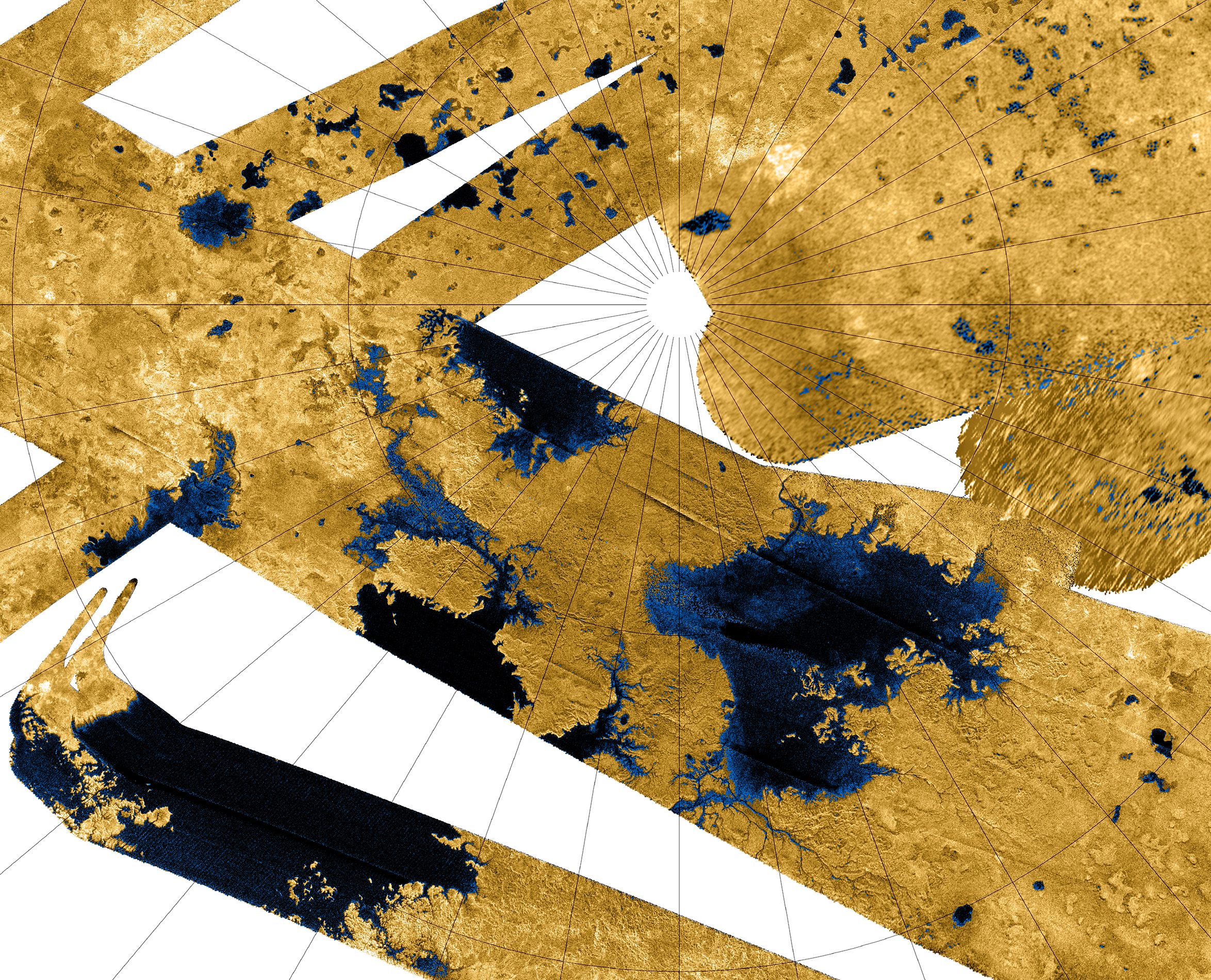
The idea that extraterrestrial life is likely to be radically different than known life I think is only partially applicable. There are a few levels to look at: first, is it possible for life to form under extremely different circumstances? Well, we don't know yet! If it is, this might be expected to produce radically different life; the canonical example might Titan, with it's methane analog to Earth's water system. But that leads to a lot of complexities I'd like to ignore for the moment. So lets just stick with what we know, starting from observations of life here on Earth. Three main points come to mind:

1. Certain areas of Earth appear to remain (largely) devoid of life, implying that such environments have no suitable "hydrocarbon-based solution," (i.e., life as we know it). This might be extended to methane-based life by describing the limited temperature range in which methane-centric chemical reactions could be expected to allow an organism to do useful work (separate entropy from thermodynamic free energy).

2. Billions of years of evolution seems to indicate some quasi-equilibriums among different strategies, (e.g., sexual v. asexual reproduction allows for greater variation per generation, so much so that many species have completely lost the ability to reproduce asexually; multicellular v. single cellular, & plant v. animal are two other apparent branches we should probably expect).

3. Selection pressures are required to increase the complexity of life, and only life with a sufficient complexity can be expected to be intelligent (at least in the way we long for). In other words, we can't really expect a bacteria colony to develop the sort of intelligence we want, we should expect it to be a multicellular animal-like creature.

I also disagree with Hawking about a number of other issues in that article, such as the Independence Day theme of locust-like E.T.s, and the analogy to Christopher Columbus and the native North Americans. This idea that you might cross the vast interstellar distances because you've consumed all your resources at home is silly to me, it's along the lines of traveling from northern Canada to Peru to buy the last existing gallon of gasoline: if you can make it there, the rewards are relatively meaningless. Likewise, interstellar travel is no small feat; in fact, I suspect it may simply be impossible for organisms to accomplish—we may simply be too fragile, with to much space separating the stars from one another to expect an organism to ever make the journey. However, we are on the brink of being able to create autonomous explorers that could sleep the journey away, though it is unclear what it would mean for them to colonize the galaxy for us. (Though to me, this appears to be the modern reasonable version of Fermi's paradox, which I think is most reasonably resolved by adjusting the likelihood of intelligent life in a proximally reachable space to zero. That is, I figure intelligence is very rare, and spread out, and possibly unlikely to ever contact one another.) The argument against a Columbus-scenario is simply the question: is that how we would expect ourselves to treat the situation if we were the explorers? Travel hundreds of trillions of miles to exploit some new land? We are even trying to take care (unclear how well we are doing), to not infect other celestial bodies with Earth-based life (we don't want to taint Europa with Earth-based life, in case it harbors it's own home-grown life). These are also some important arguments to help people understand why, say, finding oil on Mars would not really affect us at all—what makes oil so valuable in the first place is really much more than it's energy content, it is also the accessibility and abundance of the substances as well, and Mars is most certainly not accessible. (A human trip to Mars demands a 26th month-mission, to allow for best orbital positioning to make the trip. Just a radio signal to tell a robot to stop takes 10-20 minutes to transmit one way, depending on the current positions of the two planets.)

Understanding these ideas about space and scale also help one understand why nuclear waste is not as big a deal as one might first suspect, and why any proposal to launch it into space is really very silly.

Some comments written in response to space-based disposal of nuclear waste:
I've heard a lot of people propose space-based elimination of nuclear waste, and I think under scrutiny it is a very unreasonable idea, exactly because I don't think it can be made either cost-effective or safe.

We lost two shuttles out of only 129 launches, even though we put extra care into maintaining and inspecting the craft because of the human element (though in my opinion the losses could have been prevented with better management).

Even the Saturn V only lifts 47,000 kg to lunar orbit, and the shuttle cost about $50,000/lb to GTO (I'm seeing as low as 11,000$/kg for other rockets), which isn't even escape! (Additionally, it seems unlikely these prices can drop too much lower, due to the enormous fuel requirement.)

Given the millions of tons of waste to dispose, odds exceedingly favor that we would accidentally detonate a large quantity of radioactive waste in the atmosphere eventually.

What I don’t understand is why everyone is so averse to storing it here? We already maintain, monitor and protect weapons, why not protect the waste the same way? No reason to seal up the mountain and hope the caskets don’t leak or rot; inspect it every few months! Guard it! Maintain the facility! Maybe even reprocess it if we choose.

In fact, these hard economic times ought to be perfect to get Yucca mountain going, or really, whoever the lowest bidder is. Development and maintenance should generate a lot of permanent jobs, ranging from higher-education engineering to lower-education construction.

Plus transporting the waste to the site, freeing up the space the waste currently takes up at some of the reactors. It seems like consolidating our inspection, maintenance and protection costs with radioactive waste should be a no-brainer, whether from a security, economic, or environmental perspective.


Some comments I recently wrote on a blog post about the Fermi paradox and the possible resolution that intelligent beings routinely destroy themselves with technological progress:

Resolving the Fermi paradox with nuclear annihilation I think is an awfully big jump. Assuming we did experience a full nuclear exchange, even at the height of the cold war (when maybe 10 times as many weapons existed) it seems unlikely that it would completely annihilate humanity, and the persistence of even a small society, together with the many fragments of information and technology, would return to an advanced society quite quickly. It is unrealistic to think we could really wipe out humanity, or even put us back at the stone age (knowledge has always defied destruction, even in times of heavy persecution).

To me, more reasonable resolutions to the Fermi paradox include: life isn't as common as we hope; intelligence is much less probably than we hope; communication over vast distances is much more difficult than we think (just imagine the 1/r^2 drop off with r=100+ ly! Let alone competing with all the astronomical sources radiating noise.) Maybe they use much more efficient means of communication, whereby stray signals that we could detect are much less likely; maybe they have some silly prime directive, or maybe they are just so evenly dispersed in the galaxy that we can't possibly ever find them. Of course, there might be many more reasons, or any combination of these.

This is not to say that I am not on board with nuclear arms reduction or awareness - surely it is one of the few serious threats to humanity that we have complete control of, which makes it a wonderful target of our concern. I'm just want us to be realistic about these things, that's all.

Glenn wrote:
Cody:

Your resolution of the Fermi paradox seems quite quite plausible. However, concerning a nuclear conflagration, I would be somewhat less confident that we would survive as a species and quickly re-establish an advanced society.

I responded:
Glenn, I'm not saying it would be pretty, but just imagine, most information would remain intact (of course, nearly all electronic storage might be lost, there are mountains of paper-stored knowledge spread across the globe).

Of course, I would argue that our survival would be nearly certain even with the most aggressive exchange imaginable (as I did below), but more realistic scenarios, (like rogue states detonating a device as terrorism, or say an exchange between Pakistan and India), would be much less devastating still, leaving most of the industrialized world completely intact. 

Again, I still agree they are a terrible threat and we should be actively trying to decrease the number of devices, I just don't see it being as devastating as say a large asteroid impact.


Oh, I so disagree with Stuart Kauffman too! His entire argument seems centered around what I consider to be a misconception: that an "ultimate theory" would both describe all the fundamental rules governing the universe, and also provide a complete, probabilistic, "true" prediction of the future. (Provide all the possible outcomes with probabilities of being the actual outcome.) I don't know if I think the problem is that he is misconstruing what I consider to be an acceptable concept of "theory", or if it is merely his assertion that intractability of a problem means the rules governing the problem cannot be described. For instance, if the universe is analogous to a computer program, then an ultimate theory of physics would merely be the source code for the program, in a human-comprehensible language. That does not mean we would be able to run the program, and actually determine it's output. Hell, there are simple computer programs that are provably (from a mathematics perspective) uncomputable; we simply cannot predict the outcome of applying certain very simple rules in a systematic way. An interesting class of these are the Busy Beaver functions, which either run for the most steps, or output the most ones, before coming to a halt. I suppose if all he is saying is, "an ultimate theory would both describe exactly how nature works, and allow us to say ahead of time, exactly what the universe is going to do next, and such a theory is impossible to construct." If that is the case, then yes, I agree. But I think it is a silly notion to state in the first place. You cannot even expect to answer the yes or no question: given 1,000 typical mp3s of varying lengths, is there a way to partition the set into two subsets with equal total playtimes? I've chosen such a high number that we wouldn't expect you to find the answer even if the entire universe were a computer that had been working on the problem for the last 13.7 billion years! If every observable particle tested a trillion possible solutions per second every second for 13.7 billion years, it still only could have examined far less than:
0.0000000000000000000000000000000000000000-
000000000000000000000000000000000000000000-
000000000000000000000000000000000000000000-
000000000000000000000000000000000000000000-
000000000000000000000001%
of the total possible answers!
And of course, these numbers pale in comparison to even small busy beaver functions, even the six-state, two symbol machine is known to run many orders of magnitude more steps than the "playlist problem" described above! We humans routinely write multi-state, multi-symbol programs much larger than this! In many ways, the imagination really does know no bounds.

This was pretty fascinating too.


I can't figure it out; is the problem that our language feels inadequate to express our emotions?
That is, English is not enough? Words have failed me?